Call us now:
0333 7000 747
Open 9 - 6 Mon-Fri
Start your perfect holiday
contact us today!
Flight Inclusive Price from UK
- Trip length: 13 days, with 11 nights in South Korea
- Travel style: City-based, with domestic flights and day trips, private trip
- Starts and ends: Starts in Seoul, ends in Busan
- Included: Flights including domestic flights, hotels with breakfast, private transfers, sightseeing and four day trips
- Best time to go: April to May and late September to early November
- Protection: Fully ATOL & Travel Trust protected
- One dedicated specialist from first enquiry until you’re home
- Specialists with 10+ years’ tailor-made travel experience
- Private trips, never group tours
- 24-hour support while you’re away
- Rated 4.9/5 on Trustpilot
Holiday Confusion?
You need a Specialist
Not sure about South Korea?
Speak to Someone Who's Been
Classic South Korea
Classic South Korea
A private, city-based trip to South Korea, staying in Seoul, on Jeju Island and in Busan, with your flights, domestic flights, hotels, private transfers and sightseeing all arranged.
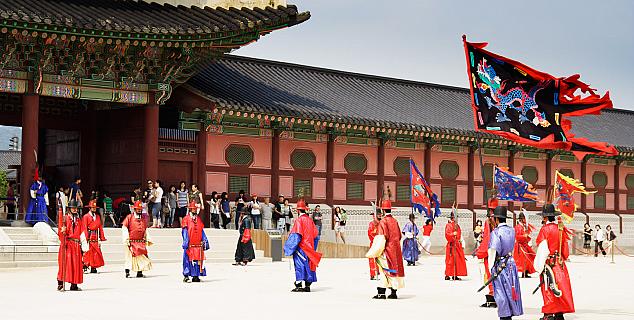
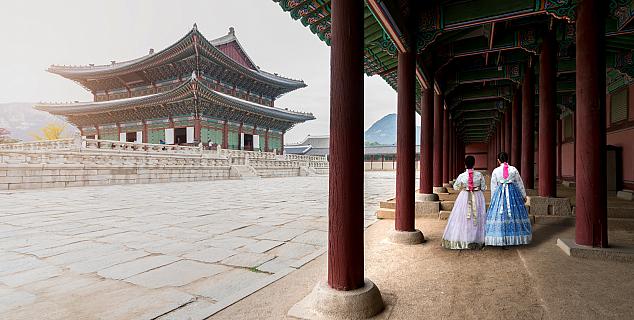
You spend 6 nights in Seoul. Two days of touring take in Gyeongbokgung Palace, Bukchon Hanok Village, N Seoul Tower and a cruise on the Han River. From Seoul you also make day trips to Suwon for Hwaseong Fortress and the Korean Folk Village, to the DMZ and the War Memorial of Korea, and to Gongju and Buyeo, the old capitals of the Baekje kingdom.
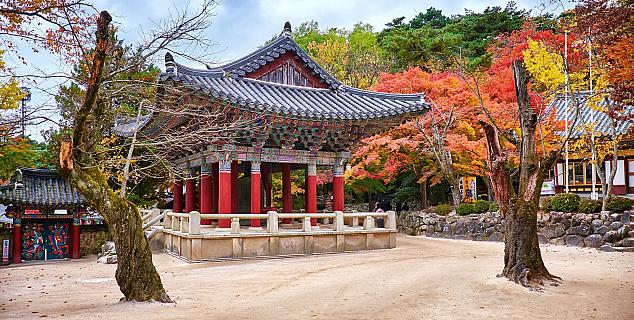
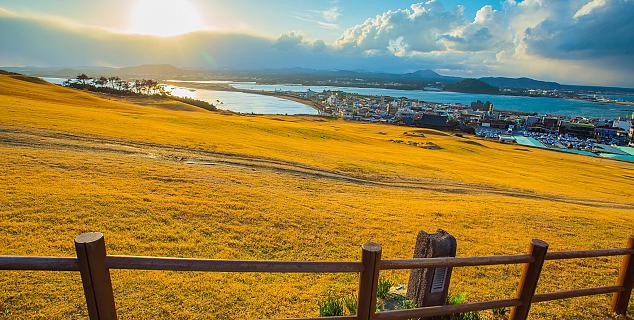
Then fly to Jeju Island for 2 nights, seeing Sanbangsan, the Jusangjeolli lava cliffs, Seongeup Folk Village and the Seopjikoji headland. A second flight takes you to Busan for 3 nights, with Haeundae Beach, the seaside Haedong Yonggungsa Temple, Jagalchi Market and Gamcheon Culture Village, plus a day trip to Gyeongju for Bulguksa Temple, Seokguram Grotto and Cheomseongdae Observatory. A short flight back to Seoul connects with your flight home.
Like all our trips, it’s easy to adjust: add nights where you’d like longer, upgrade your hotels or change the route to suit you.
Tell us your dates and we’ll price this trip for you, or tailor it around your interests.
Or call 0333 7000 747 (Mon–Fri, 9am–6pm)
What’s Included
- Flights: Return economy flights from the UK to Seoul, including airline taxes, plus domestic flights from Seoul to Jeju, Jeju to Busan and Busan to Seoul
- Accommodation: 11 nights in hotels, with breakfast daily
- Transfers: All transfers by private vehicle
- Sightseeing: Private sightseeing in Seoul, Jeju Island and Busan, with day trips to Suwon, the DMZ, Gongju and Buyeo, and Gyeongju
- Experiences: A Han River cruise, and visits to the DMZ and the War Memorial of Korea
- Protection: Fully ATOL & Travel Trust protected
Your Route
- Seoul – 6 nights
- Jeju Island – 2 nights
- Busan – 3 nights
11 nights in South Korea, plus an overnight flight out. Depending on the airline, your flight home may also be overnight.
Is this a private trip, and can I change it?
It’s a private trip built around your dates, not a group tour on fixed departures. Your sightseeing in Seoul, on Jeju Island and in Busan is private, and so are your day trips to Suwon, the DMZ, Gongju and Buyeo, and Gyeongju.
You can change anything: add nights, swap places, upgrade hotels or slow the pace, and we’ll reprice it for you.
When is the best time to go?
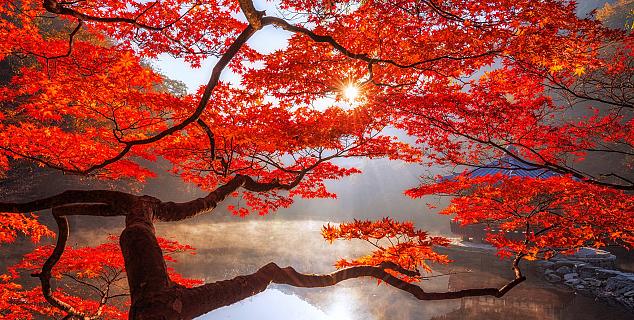
Spring and autumn are best. April and May are mild, with cherry blossom in late March or early April, and Jeju has yellow rapeseed fields in March and April. Late September to early November is dry and clear, with autumn colour in Seoul and Gyeongju from late October.
Summer is hot and humid, with a rainy season from late June through July, though it’s beach season in Busan and on Jeju. Typhoons in late summer can delay flights to and from Jeju. Winter is cold in Seoul but milder in Busan and on Jeju. Around Chuseok in September or October and Lunar New Year in January or February, flights and roads are busy, so we’ll plan around them.
Which airlines do you use?
We work with the main airlines flying to South Korea, including Korean Air, Virgin Atlantic, Asiana and Finnair. Direct flights from London Heathrow to Seoul Incheon take around 14 hours, and Finnair flies via Helsinki, often with good fares.
The flight out is overnight, landing in Seoul the next day. The flight home is usually a daytime flight, landing in the UK the same day. We can also book connecting flights from regional UK airports, and you’re welcome to ask for a particular airline.
What are the hotels like?
We choose hotels for their location, comfort and character, from boutique city hotels to international chains. Rooms in Seoul and Busan are often compact, while hotels in smaller towns and national parks tend to be roomier but simpler.
Check-in is usually from 3pm, and hotels will keep your bags if you arrive earlier. If you’d like a night in a hanok, a traditional wooden house where you may sleep on a mattress on a heated floor, we can add one.
How do we get around?
You fly between Seoul, Jeju Island and Busan, and a private vehicle meets you at each airport. The flights are short, about an hour each. In Seoul, domestic flights usually use Gimpo Airport, which is closer to the city than Incheon.
Domestic flights can have a lower baggage allowance than your international flights, so check your quote before you pack. In Seoul and Busan the metro is quick, cheap and signed in English if you want to explore on your own.
Any tips for exploring on my own?
Google Maps doesn’t give full walking or driving directions in South Korea, so download Naver Map or KakaoMap before you go. Both work in English and are what locals use.
A T-money card, sold at convenience stores and metro stations, pays for the metro, buses and many taxis. Signs in Seoul and Busan are in English as well as Korean, and free wifi is easy to find.
Do I need a visa?
UK passport holders don’t need a visa for a holiday in South Korea. You may need a K-ETA (Korea Electronic Travel Authorisation) before you fly, as the rules for UK travellers have changed in recent years. If you do, apply only through the official K-ETA website, because other sites charge extra for the same thing.
Check the latest FCDO travel advice for South Korea before you book and again before you travel. If you hold a different passport, ask us and we’ll help you check what you need.
What isn’t included, and do I need to tip?
You’ll pay for lunches and dinners, drinks, personal spending and travel insurance. Your quote lists exactly what’s included.
Tipping isn’t part of Korean culture, and restaurants, taxis and hotels don’t expect it. Cards, including contactless, are accepted almost everywhere, but carry some Korean won for street food, markets and topping up a T-money travel card, which usually needs cash.
How do I pay, and is my money protected?
We take a deposit to confirm your booking, and the balance is due before you travel. Your quote shows the exact amounts and dates.
Every holiday with flights is ATOL protected (ATOL T9762), and we’re members of the Travel Trust Association (U5660), so the money you pay us is protected. We also strongly recommend taking out travel insurance as soon as you book.
What happens if something goes wrong while I’m away?
You’ll have a 24-hour emergency number for your whole trip. During office hours, Monday to Friday, 9am to 6pm UK time, you can also call our team on 0333 7000 747.
Who are Jasmine Holidays?
We’re an independent UK tour operator, arranging tailor-made holidays since 2007. You deal with one specialist from your first call until you’re home, and our clients rate us 4.9 out of 5 on Trustpilot.
Seoul
Buzzing, bold, and brilliantly multifaceted, Seoul is a city where ultra-modern skyscrapers and high-tech subways coexist with serene temples, ancient palaces, and quiet hanok villages.
Often described as the heartbeat of South Korea, Seoul is a place where centuries-old tradition and cutting-edge innovation merge seamlessly. Neon-lit districts like Gangnam and Hongdae pulse with energy, fashion, and music, while tranquil spots such as Bukchon Hanok Village and Gyeongbokgung Palace whisper stories of dynasties past.
Beyond its glittering skyline, Seoul is a cultural powerhouse—home to pioneering design, dynamic street food, vibrant K-pop culture, and an ever-evolving art and café scene that keeps it perpetually fresh and fascinating.
Jeju Island
Often called “Korea’s Island Paradise,” Jeju is a volcanic gem famed for its stunning natural beauty, unique culture, and relaxed island pace.
From the dramatic cliffs of Seongsan Ilchulbong and the mysterious lava tubes of Manjanggul Cave to the rolling green tea fields and cascading waterfalls inland, the island’s landscapes are breathtakingly diverse.
Jeju’s charming villages and towns offer a glimpse into local life, where traditional stone walls and thatched-roof houses sit alongside modern cafés, boutique shops, and lively seafood markets. Jeju City and Seogwipo provide hubs for exploring the island, with easy access to beaches, hiking trails, and cultural sites.
The island is also famous for its fresh seafood, tangerines, and unique local traditions, from Haenyeo women divers to vibrant local festivals, making Jeju a destination that blends nature, history, and contemporary island life.
DMZ (Demilitarised Zone)
The DMZ offers a rare glimpse into Korea’s complex history and tense geopolitical landscape, while also surprisingly revealing pockets of untouched nature.
Visitors can explore areas like Dora Observatory, the Third Infiltration Tunnel, and the Joint Security Area (JSA), gaining insight into the ongoing division between North and South Korea. Guided tours provide historical context and safe access to these heavily monitored zones.
Beyond the military significance, the DMZ is also an ecological haven, home to rare migratory birds and diverse wildlife that thrive in the largely untouched buffer zone. Visiting the DMZ is both an educational journey and a poignant reminder of Korea’s past, present, and hopes for the future.
Suwon
Known as the “Fortress City,” Suwon is a vibrant city where history and modern life coexist seamlessly.
The crown jewel is Hwaseong Fortress, a UNESCO World Heritage site encircling the old city with impressive walls, gates, and watchtowers. Walking along its ramparts offers panoramic views of Suwon’s blend of historic neighborhoods and contemporary cityscapes.
Beyond the fortress, Suwon brims with culture and cuisine—local markets and streets are famous for Suwon galbi (Korean-style grilled ribs), while modern cafés, galleries, and shopping districts add a contemporary twist. With its accessible location just south of Seoul, Suwon provides a rich historical experience without straying far from the capital.
Gyeongju
Often referred to as “the museum without walls,” Gyeongju is a living testament to Korea’s ancient Silla Kingdom and one of the most historically rich destinations in the country.
Here, royal tombs dot the landscape as grassy mounds, ancient pagodas sit beside peaceful lotus ponds, and centuries-old stone carvings are found along the nearby mountainsides.
Strolling through Gyeongju feels like stepping back in time—each corner reveals traces of Korea’s golden age, from the exquisite Bulguksa Temple and Seokguram Grotto to the charming traditional streets around Hwangnidan-gil.
Busan
South Korea’s spirited second city, Busan, perfectly balances urban energy with laid-back coastal charm.
Set between forested mountains and the shimmering sea, Busan is famed for its golden beaches, bustling seafood markets, and colorful hillside neighborhoods that tumble down toward the water.
Haeundae and Gwangalli beaches draw crowds in summer, while the jagged cliffs of Taejongdae and the vibrant alleys of Gamcheon Culture Village reveal a more artistic, introspective side.
Add in world-class film festivals, steamy natural hot springs, and some of the best seafood in Asia, and it’s clear why Busan captures the imagination of travelers seeking both excitement and escape.
View Itinerary in Detail
To view a sample holiday, click on one of the links below. This will open the itinerary up in a new window.
All of our South Korea Holidays are completely tailor made and we can put together any kind of itinerary to suit your interests and budget.
We have many other options so if you have a particular hotel in mind just let us know and we'll put together a price and itinerary for you.
Contact Us
Have a question about this trip, or would you like it priced for your dates? Our specialists are happy to help.
Call us on 0333 7000 747
Lines open Mon–Fri, 9am–6pm, with 24-hour support while you’re away.
Prefer email? sales@jasmineholidays.co.uk
Classic South Korea

Classic South Korea
Discover the best of South Korea on this 11-day private journey from Seoul to Jeju Island.
Includes all flights from UK, Accommodation, Breakfast, Tours, Transfers.

